
When choosing FIBC bulk bags for industrial packaging, capacity is not the only factor to consider. The shape of a filled bag can also affect warehouse storage, pallet stacking, and transportation efficiency.
This is where the difference between baffle bags and standard bulk bags becomes important.
Both designs are widely used for packaging agricultural products, minerals, chemicals, plastic resins, and other bulk materials. However, their internal construction affects how they maintain their shape after filling.
In this guide, we compare baffle bags vs standard bulk bags to help importers, distributors, and industrial buyers understand when shape retention matters and which FIBC design is more suitable for their applications.
1. What Are Standard Bulk Bags?
Standard bulk bags are Flexible Intermediate Bulk Containers (FIBCs) made from woven polypropylene (PP) fabric. They are designed to package, store, and transport large quantities of dry bulk materials.
Unlike baffled bags, standard bulk bags do not have additional internal corner panels to control outward bulging.
When filled, the fabric walls can expand outward depending on the material, filling weight, bag dimensions, and construction.
Key Features of Standard FIBC Bags:
-
Simple and practical construction.
-
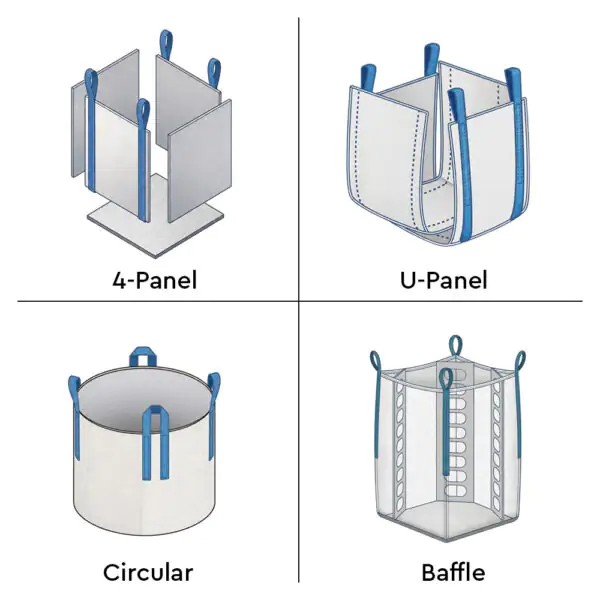
Available in U-panel and circular designs.
-
Suitable for various powders, granules, and agricultural materials.
-
Customizable dimensions and safe working loads.
-
Available with different top and bottom configurations.
Standard bulk bags are a practical choice for many applications where a conventional bag shape is sufficient and maximum space utilization is not the primary concern.
2. What Are Baffle Bulk Bags?
Baffle bulk bags, also known as baffled FIBC bags, feature additional fabric panels sewn inside the four corners of the bag.
These internal panels connect adjacent bag walls and help control outward bulging when the bag is filled.
As a result, a baffled bulk bag can maintain a more square or rectangular shape compared with a standard bag of similar dimensions.
Key Features of Baffle FIBC Bags:
-
Internal corner baffles for improved shape retention.
-
More consistent filled dimensions.
-
Reduced outward bulging.
-
Better pallet and warehouse space utilization.
-
Suitable for applications requiring more efficient transportation and storage.
Baffle bags can be manufactured using different base constructions, including U-panel and circular designs.
Explore our Baffle FIBC Bags to learn more about customized designs and packaging options.
3. Baffle Bags vs Standard Bulk Bags: Key Differences
When comparing baffle bags vs standard bulk bags, the biggest difference is how they maintain their shape after filling.
| Comparison | Standard Bulk Bags | Baffle Bulk Bags |
|---|---|---|
| Internal construction | No corner baffles | Internal corner baffles |
| Filled shape | More outward bulging | More square or rectangular |
| Shape retention | Depends on fabric and design | Improved by internal baffles |
| Pallet arrangement | May leave more unused space | Can improve space utilization |
| Container loading | Depends on filled dimensions | Can allow more efficient arrangement |
| Manufacturing | Conventional construction | Additional internal panels and sewing |
| Load capacity | Customized to requirements | Customized to requirements |
| Base construction | U-panel or circular | U-panel or circular |
Both types can be customized according to product characteristics, filling requirements, and transportation conditions.
The choice should depend on the desired filled shape and overall packaging requirements rather than assuming that one design is always better.
4. Why Does Shape Matter for Storage and Transportation?
The shape of an FIBC bulk bag can make a difference throughout the supply chain.
Better Pallet Utilization
Standard bulk bags may bulge outward after filling, making it harder to maintain consistent dimensions on a pallet.
Baffle bags help control this expansion and can create a more uniform shape, making pallet arrangement easier.
More Efficient Warehouse Storage
When bags maintain a squarer shape, warehouse operators may find it easier to arrange them in rows and use available storage space.
However, actual stacking arrangements must still follow the bag manufacturer’s handling and safety recommendations.
Container Loading Efficiency
For importers shipping multiple containers, the external dimensions of filled bags are important.
Baffled FIBCs can help reduce wasted space caused by excessive outward bulging. This may improve loading arrangements, depending on bag dimensions, product density, and container specifications.
For businesses handling large shipment volumes, even small improvements in packing efficiency can be commercially valuable.
5. Which Bulk Bag Should You Choose?
The right option depends on your products, storage conditions, and transportation requirements.
Choose Standard Bulk Bags If:
-
Your product does not require a square filled shape.
-
You use conventional storage and handling methods.
-
Your existing pallet and container arrangements work well.
-
You prefer a straightforward bulk packaging design.
-
Shape retention is not a major concern.
Choose Baffle Bulk Bags If:
-
You want better shape retention after filling.
-
You need more consistent bag dimensions.
-
You want to improve pallet space utilization.
-
You ship large volumes and need efficient container loading.
-
Your warehouse requires more uniform bag shapes.
Both standard and baffled bulk bags can be customized with different dimensions, lifting loops, filling spouts, discharge spouts, coatings, and liners.
6. Can U-Panel and Circular Bulk Bags Both Have Baffles?
Yes. Baffle construction is not limited to one type of FIBC base design.
Both U-panel and circular bulk bags can be manufactured with internal baffles according to customer requirements.
U-panel bags use a continuous U-shaped fabric section across the bottom and two opposite sides, while circular bags use tubular woven PP fabric for the main body.
Adding internal baffles to either construction helps control outward bulging and improve the shape of the filled bag.
If you are comparing these two base designs, read our guide to U-Panel vs Circular Bulk Bags to understand their construction and application differences.
You can also explore our U-Panel FIBC Bags and Circular FIBC Bags for more information about available product configurations.
7. What Should You Consider Before Ordering Baffle Bags?
Before placing an order, buyers should confirm several important specifications with their FIBC supplier:
-
Product type: Powder, granules, fertilizer, minerals, or other bulk materials.
-
Bag dimensions: Required length, width, and height.
-
Safe working load (SWL): Required filling weight per bag.
-
Base construction: U-panel or circular.
-
Top design: Open top, duffle top, or filling spout.
-
Bottom design: Flat bottom or discharge spout.
-
Additional options: Baffles, liners, coatings, and printing.
Load capacity is determined by the complete bag design, fabric specifications, stitching, lifting-loop construction, and testing. Baffles are primarily designed to improve shape retention, not automatically increase the bag’s load capacity.
Working with an experienced supplier helps ensure that the bag design matches your filling, storage, and transportation requirements.
8. Baffle Bags vs Standard Bulk Bags: Final Recommendation
There is no single solution for every packaging application.
Standard bulk bags are practical for general-purpose packaging where a conventional filled shape is acceptable.
Baffle bulk bags are a better option when maintaining a more square shape, improving pallet arrangement, and making better use of warehouse or container space are important.
When evaluating baffle bags vs standard bulk bags, consider your product, required bag dimensions, filling weight, and transportation arrangements before making a decision.
At UWON Packaging, we provide customized FIBC bulk bags in both standard and baffled designs. Whether you need U-panel or circular construction, our team can help you develop a suitable packaging solution based on your requirements.
Contact us today to discuss your bulk bag specifications and request a competitive quotation.
Frequently Asked Questions
Baffle bags have additional internal fabric panels sewn into their corners to control outward bulging. Standard bulk bags do not have these internal baffles.
2. Are baffle bags better than standard bulk bags?
Baffle bags are often better when shape retention and space utilization are important. Standard bags are suitable for applications where a conventional filled shape is acceptable.
3. Do baffle bags have a higher load capacity?
Not necessarily. Baffles improve the bag’s shape retention, but load capacity depends on fabric specifications, dimensions, stitching, lifting-loop design, and testing.
4. Can U-panel bulk bags have baffles?
Yes. U-panel FIBC bags can be customized with internal baffles to improve shape retention.
5. Can circular bulk bags have baffles?
Yes. Circular FIBC bags can also be manufactured with internal baffles according to customer requirements.
6. Do baffle bags save shipping costs?
They can help improve container space utilization by reducing outward bulging. However, actual savings depend on bag dimensions, product density, loading arrangements, and shipping conditions.