
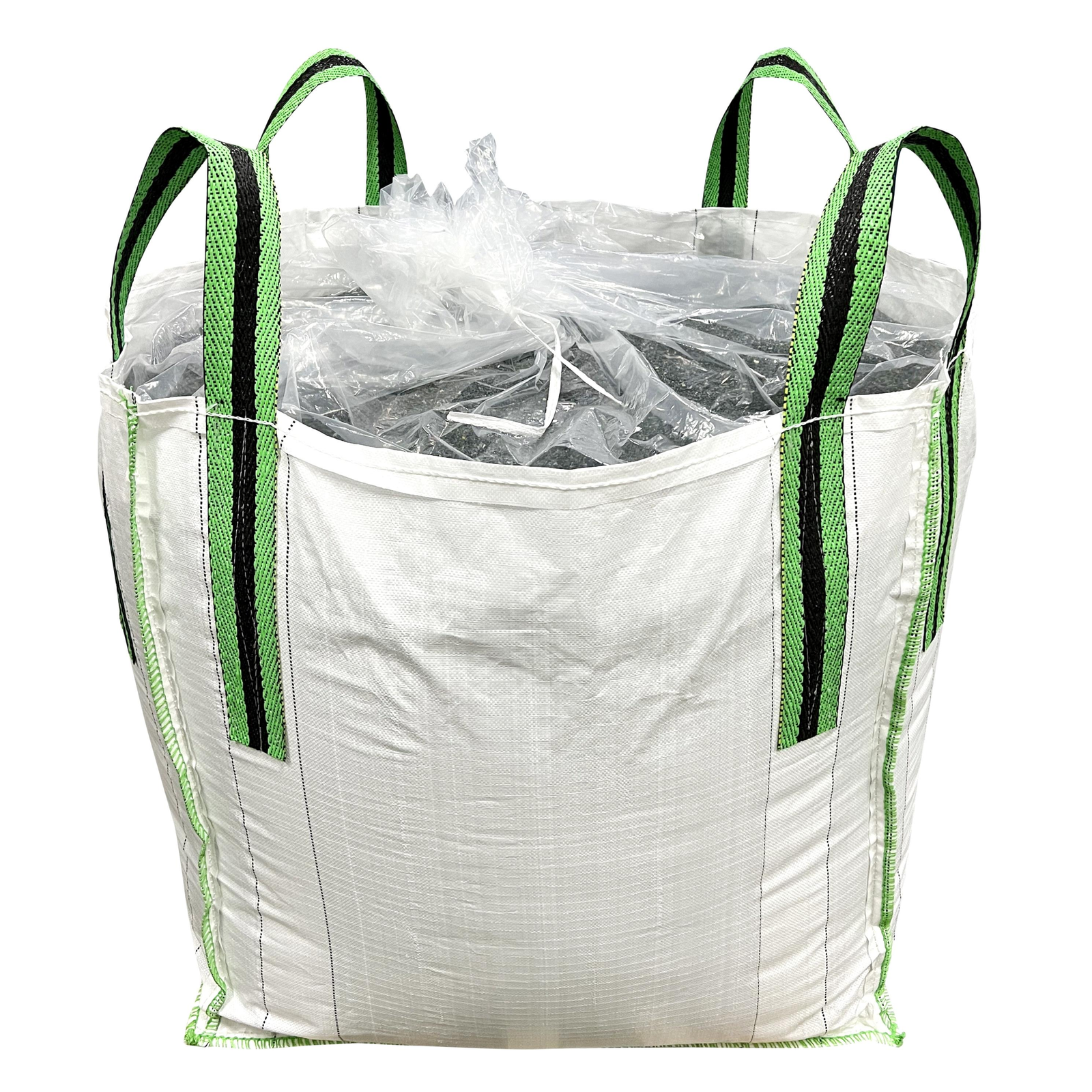
FIBC Bags with Liners
FIBC bags with liners combine woven polypropylene outer bags with an additional inner liner to provide an extra layer of containment and product protection. They are designed for applications where standard woven fabric alone may not provide the required level of moisture protection, fine-powder containment or material separation.
Depending on the application, the inner liner can be manufactured from polyethylene materials such as LDPE or HDPE. Different liner thicknesses, shapes and attachment methods can be considered according to the material being packed.
Lined bulk bags can be designed using U-panel, circular, four-panel or baffle constructions.
Share your size, quantity and delivery requirements.
Key Features
-
Additional inner layer for product containment.
-
Optional LDPE and HDPE liner materials.
-
Different liner thicknesses and dimensions.
-
Loose, attached or fitted liner configurations, subject to availability.
-
Compatible with multiple FIBC body constructions.
-
Optional filling and discharge spouts.
Technical Specifications
| Parameter | Specification |
|---|---|
| Outer Bag | Woven Polypropylene FIBC |
| Liner Material | LDPE / HDPE |
| Liner Thickness | To be confirmed |
| Liner Structure | Single Layer / Multi-Layer, subject to availability |
| Liner Attachment | Loose / Tabbed / Stitched / Fitted |
| Bag Construction | U-Panel / Circular / Four-Panel / Baffle |
| SWL | To be confirmed |
| Top | Open / Duffle / Filling Spout |
| Bottom | Flat / Discharge Spout |
| Coating | Optional |
| Printing | Customized |
Product Performance
An inner liner provides an additional containment barrier between the packed material and the outer woven fabric. It may help reduce moisture exposure or product leakage, depending on the liner material, thickness, closures and seam construction.
For hygroscopic materials, fine powders or products requiring higher barrier performance, the liner specification should be reviewed carefully. Standard polyethylene liners should not automatically be considered airtight or suitable for every moisture-sensitive product.
Typical Applications
-
Fine powders and industrial chemicals.
-
Plastic resin and polymer materials.
-
Fertilizer and agricultural products.
-
Moisture-sensitive dry commodities.
-
Food ingredients, subject to food-contact approval.
Customization Options
Choose the liner material, thickness, dimensions, attachment method and filling or discharge arrangement. Liner compatibility with the packed material should be confirmed before production.
Quality Control
Check liner thickness, sealing quality, dimensions, attachment points and compatibility with the outer FIBC. For sensitive applications, define the required barrier performance and inspection criteria before ordering.
Frequently Asked Questions
Q1: Why do bulk bags need inner liners?
Inner liners provide an additional layer for containment and can help protect certain products against moisture exposure or leakage.
Q2: What is the difference between LDPE and HDPE liners?
They are different polyethylene materials with different physical properties. The correct choice depends on flexibility, thickness, temperature and application requirements.
Q3: Can a lined FIBC also be a Q Bag?
Yes. A compatible liner can be used with a baffle FIBC design.
Request a Quote for FIBC Bags with Liners
Send your material details, liner requirements, target weight, bag dimensions and quantity. If available, provide your existing liner sample or technical drawing.
Related products

Need a custom specification?
Tell us your packaging needs, and our team will help you explore suitable options.